What's Inside the Museum of the Future: A Floor-by-Floor Guide
The Museum of the Future is less a collection of objects and more a stack of immersive worlds inside a silver ring. Here is what waits on every floor.
Most museums ask you to look. The Museum of the Future asks you to step into 2071 and move through it. Behind the silver, calligraphy-wrapped ring on Sheikh Zayed Road sits a sequence of built worlds, each one a full-scale environment rather than a case of objects. Our team has mapped what waits on every level, how long each one tends to hold attention, and the moments worth slowing down for.
What is actually inside the Museum of the Future, floor by floor?
Inside are seven floors of immersive, themed environments rather than glass cases: an orbital space station, a bio-engineering institute with a digital vault of thousands of species, a sensory wellness oasis, a hall of near-future prototypes, and a hands-on children's world, all wrapped by a calligraphy-covered torus with an open-air terrace up top.
The visit is designed as a descent. A high-speed elevator, styled like a spacecraft, carries you to the top, and you work your way down through the themed floors before reaching the children's world and the lobby. There is no permanent object collection here and the content rotates, so what you experience is closer to a set of stage designs than a gallery hang. Entry runs on timed slots, and once you are inside your slot you can take the floors at your own pace.
| Level | Environment | Theme | What to expect | Time to allow |
|---|---|---|---|---|
| Top | OSS Hope | Future of space | An orbital station set in 2071, research consoles, a view of Earth from above | 25 to 35 min |
| Upper-mid | HEAL Institute and the Vault of Life | Future of nature | A forest environment and a digital library of thousands of species | 25 to 40 min |
| Mid | Al Waha | Wellness | A calm, low-tech sensory oasis built for a digital detox | 15 to 25 min |
| Lower-mid | Tomorrow Today | Near-future tech | Working prototypes across health, mobility, energy and robotics | 20 to 30 min |
| Ground | Future Heroes | Children | A hands-on play world for younger visitors | 20 to 45 min with kids |
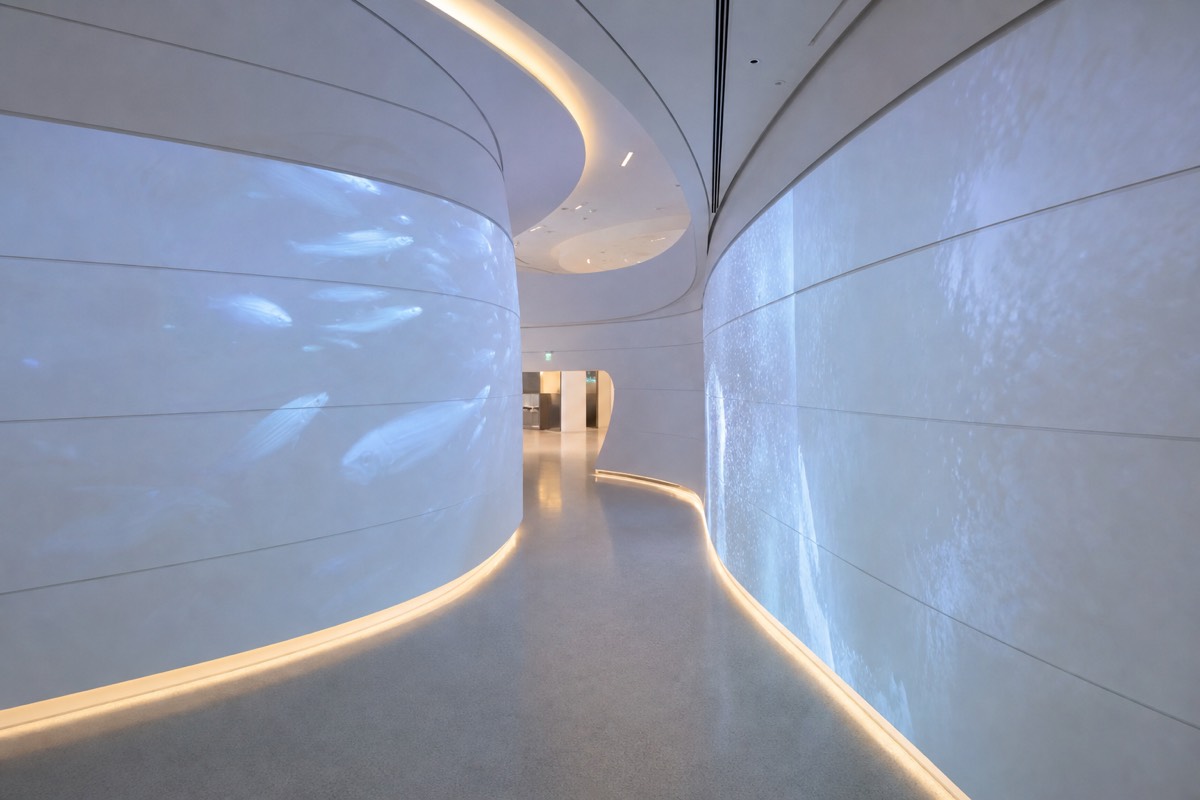
| Ground atrium | The void | Arrival | A dramatic spiral drop and the calligraphy seen from inside | 10 to 15 min |
| Roof | Terrace | Outdoor | Open-air views over Sheikh Zayed Road and the skyline | 10 to 15 min |
Because the museum is entered on advance timed tickets, it helps to know the shape of the visit before you arrive. If you want to compare the current entry options first, our team keeps them listed on Museum of the Future Tickets. Reading the layout in advance also makes it easier to judge whether the experience is worth the money for your group, and to plan the best time to visit around the quieter morning slots.
What happens on the top floor, OSS Hope and the Future of Space?
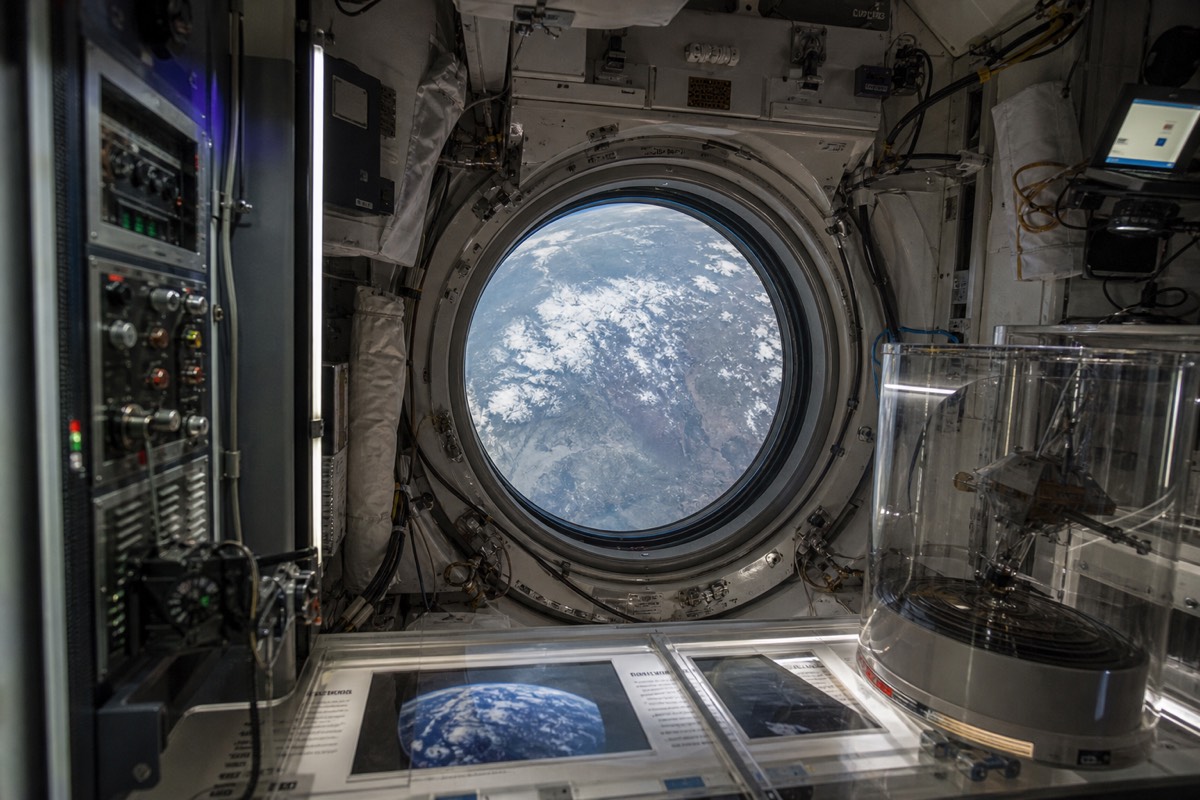
OSS Hope is a full-scale orbital space station set in the year 2071, reached first by a fast elevator ride to the top of the building. You explore research consoles, sleeping pods and observation windows, and the story running through it is how humanity could harvest solar energy in space and live off-world within fifty years.
This is the floor that surprises people. It is built like a real habitat, not a diorama, so you walk corridors, sit at stations and look out at a projected Earth rather than reading labels on a wall. The lighting is deliberately low in places, which sets the mood but also means younger children can find a few corners a little intense. Give yourself half an hour here. It rewards slow exploration, and the details, from the mission logs to the greenhouse pods, are where the writing team behind the museum clearly had the most fun.
Practically, OSS Hope sits at the start of the route because you ride to the top and then descend. If you are travelling with children, this is a useful moment to gauge their energy, since the calmer and busier floors alternate from here down.
What is the HEAL Institute and the Vault of Life?
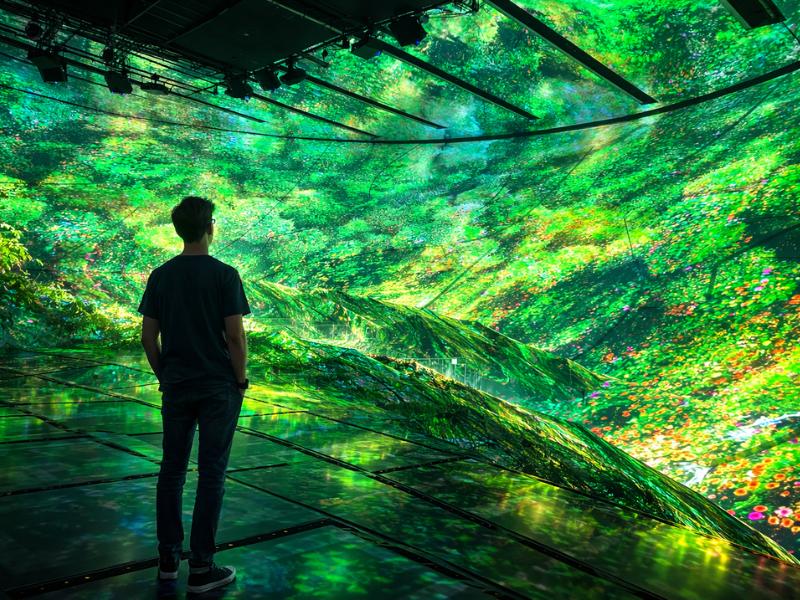
The HEAL Institute is a future research center set inside a lush forest environment, and its centerpiece is the Vault of Life, a floor-to-ceiling digital library of thousands of catalogued species. It presents a hopeful, restored natural world where DNA has been preserved and ecosystems rebuilt, blending real biology with near-future bio-engineering.
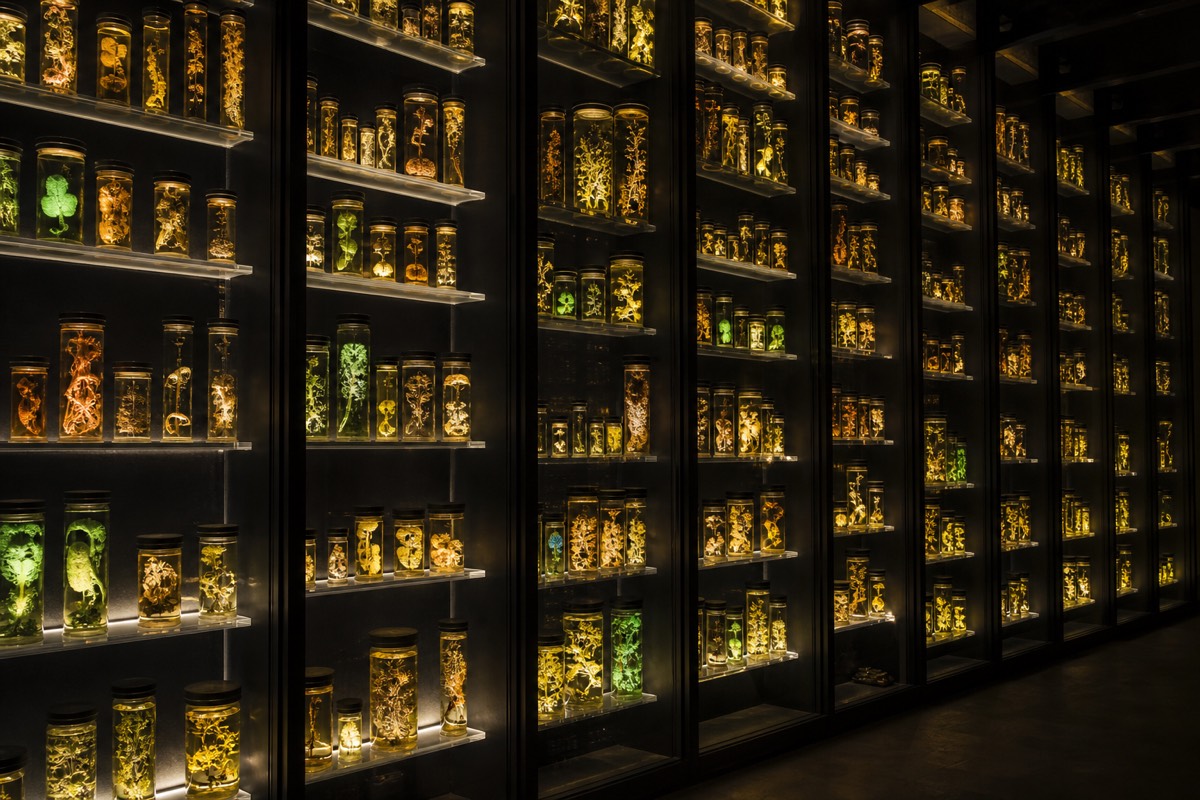
The Vault is the photograph everyone takes. Rows of illuminated cells climb the walls, each one standing for a species, and the sheer scale of it lands the point about biodiversity better than any panel could. The museum's own materials have cited the collection at figures ranging from around 2,400 to more than 4,000 species, so we describe it honestly as a library of thousands rather than fixing a single number. Around it, the forest floor of the institute is planted with light, sound and scent, and there are interactive stations where you can look up individual organisms.
Allow between twenty-five and forty minutes. Nature lovers and families with curious older children tend to linger, and the contrast with the space station one level up is part of what makes the sequence work.
What is Al Waha, the sensory wellness floor?
Al Waha, meaning "the oasis," is the quiet heart of the building: a deliberately low-technology sensory space designed for a digital detox. There are no screens here. Instead you find water, soft light, tactile surfaces and calm soundscapes, a pause built into the middle of an otherwise high-stimulation visit.
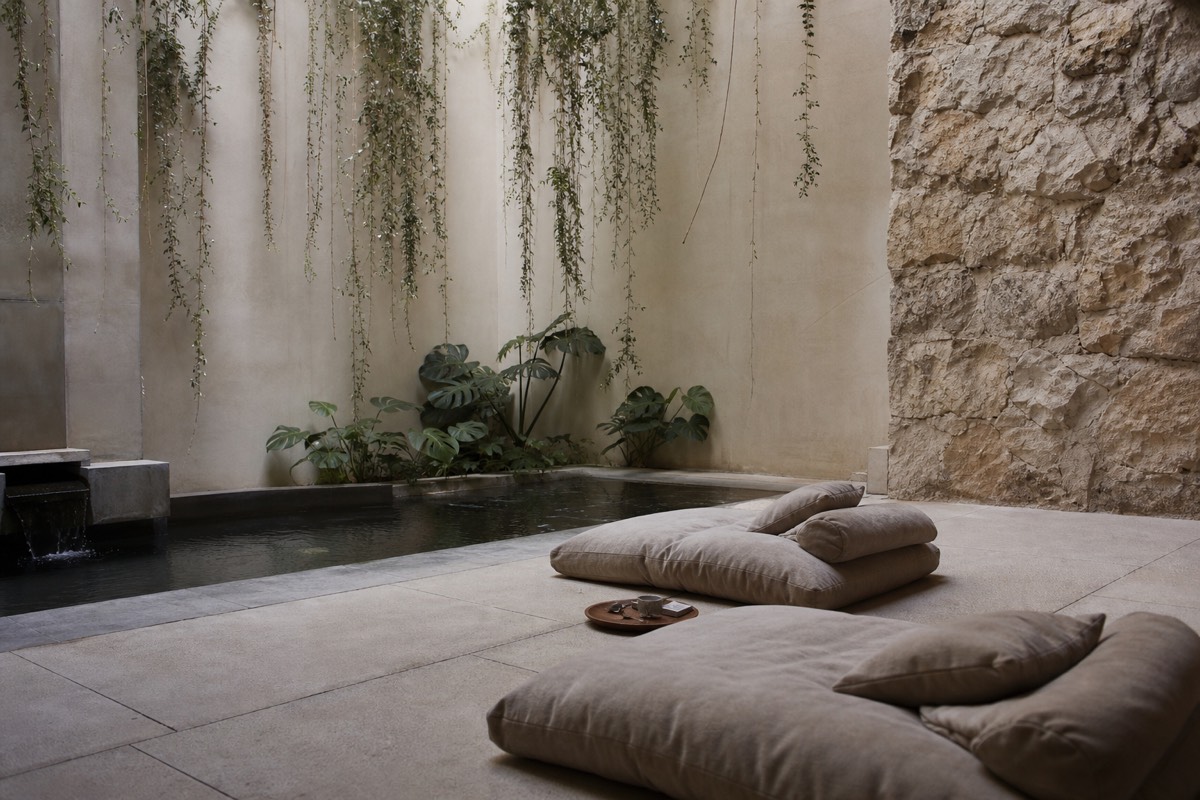
After two floors of consoles and glowing vaults, Al Waha resets the pace. The design asks you to put the phone away and simply feel the space, and many visitors say it is the part they remember most, precisely because it does the opposite of what they expected from a future museum. It is a short floor, fifteen to twenty-five minutes is plenty, but skipping it would be a mistake. For families, it doubles as a genuine breather where a restless child can slow down before the next burst of activity.
What will you find in Tomorrow Today?
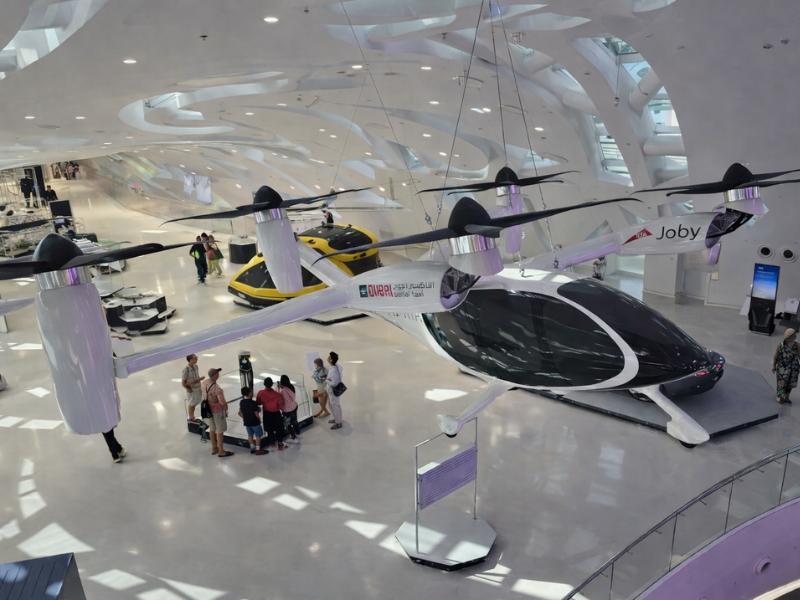
Tomorrow Today is the floor closest to the present: a gallery of real prototypes and near-future innovations you could plausibly see in the next decade. Exhibits rotate, but they typically span health and longevity, clean energy, mobility, robotics and materials, with working models rather than distant concepts.
If OSS Hope is the dream and HEAL is the hope, Tomorrow Today is the plan. This is where the museum grounds its optimism in things already being built, which makes it the most conversation-generating floor for adults and older students. Because the objects on show change over time, it is also the section most likely to differ from what you read in older reviews, so treat any specific exhibit list as a snapshot. Budget twenty to thirty minutes, more if you like to read every station.
Is the Future Heroes children's floor worth your time?
Future Heroes is a dedicated, hands-on floor for children, roughly aimed at ages three to ten, built around play that teaches teamwork, empathy and problem-solving. It is climbing, building and role-play rather than screens, and for families it is often the highlight and the reason a visit stretches longer than planned.
Adults visiting without children can move through it quickly, but anyone visiting with kids should treat this as a main event, not an afterthought. Younger visitors burn energy here in the best way, and staff are on hand to keep the play moving. If you are weighing a family visit, our separate guide to visiting with children goes deeper on ages, timing and facilities. Even without kids in tow, it is worth a look, if only to see how the building translates its big ideas into something a six-year-old can grab with both hands.
What is on the outdoor terrace, and what does the building itself say?
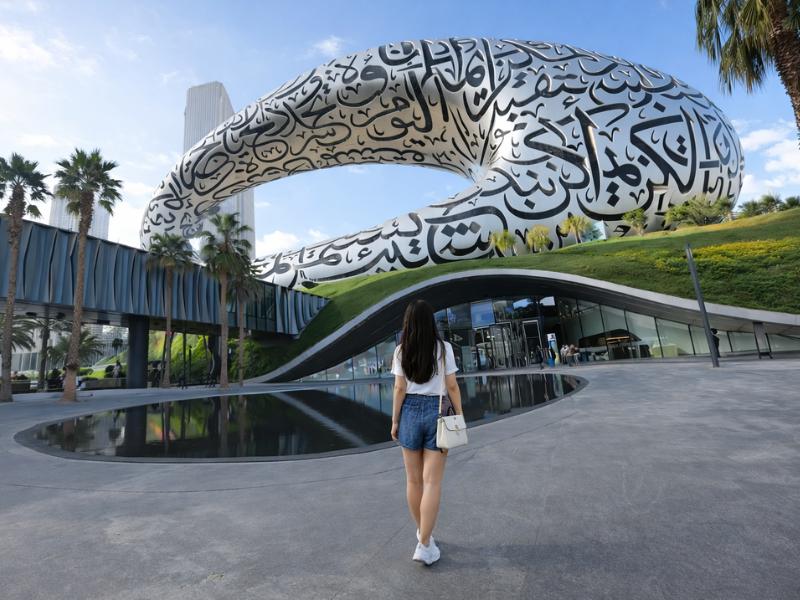
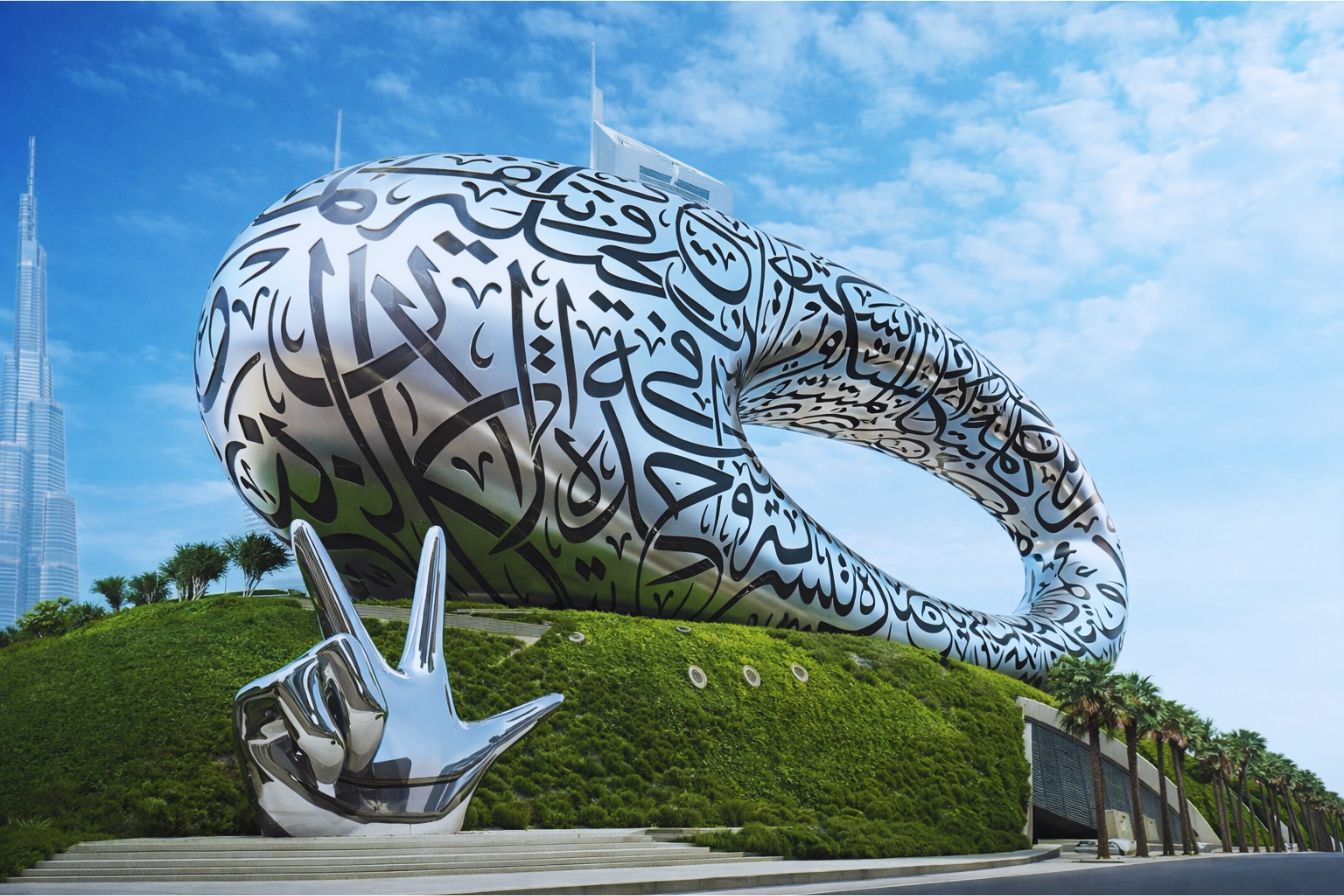
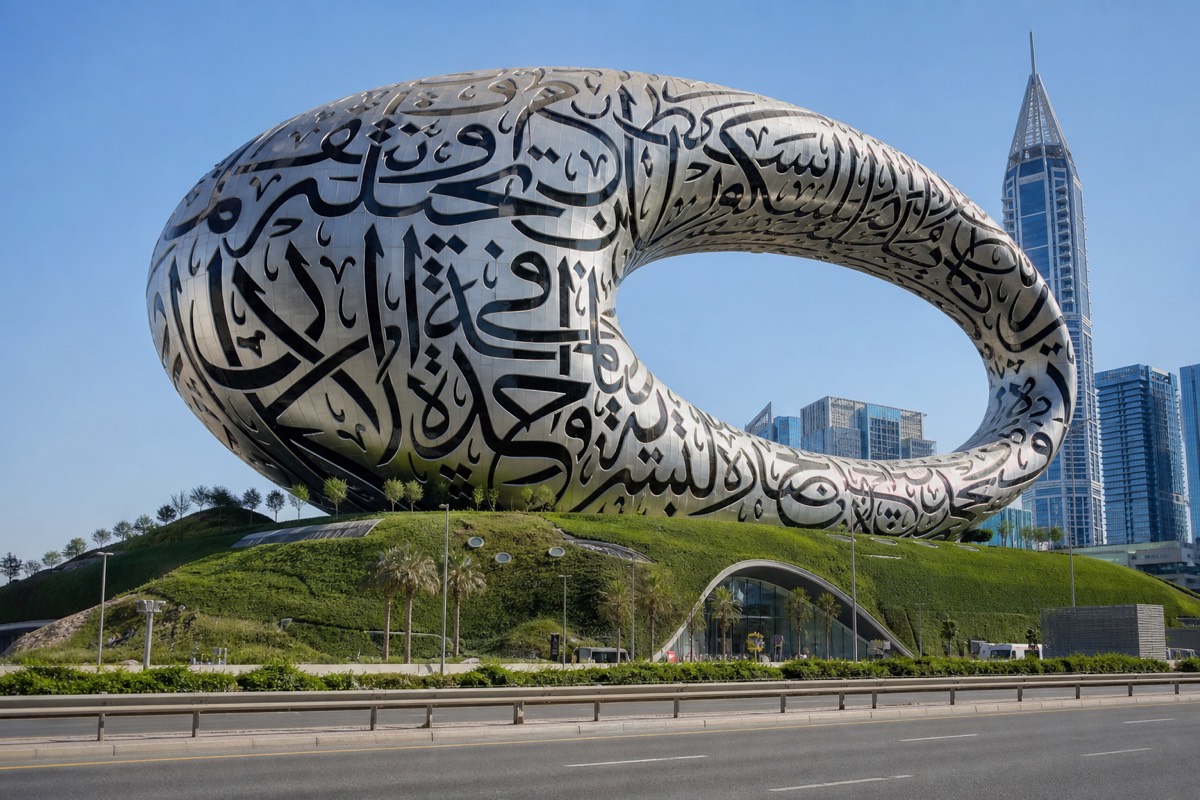
The visit ends outdoors on a terrace with open views over Sheikh Zayed Road and the Financial District skyline. The building itself is the largest exhibit: a torus, or silver ring, designed by Killa Design, opened in 2022 under the Dubai Future Foundation, and wrapped in Arabic calligraphy carrying three quotes about the future from the Ruler of Dubai.
Stand on the terrace and look back at the facade. Those flowing letters are not decoration alone; they are windows, so daylight enters the galleries through the poetry itself. The three quotes are by Sheikh Mohammed bin Rashid Al Maktoum, and they turn the shell into a piece of writing you can read from the road. The hollow center of the torus, that dramatic void you first meet in the atrium, is meant to represent the unknown of the future. It is the sort of detail that makes the architecture worth studying on its own terms, and it explains why the exterior draws photographers even from people who never go inside.
| Feature | Detail |
|---|---|
| Shape | Torus, a silver ring with a hollow center |
| Architect | Killa Design |
| Opened | 2022 |
| Operated by | Dubai Future Foundation |
| Facade | Arabic calligraphy, three quotes on the future by Sheikh Mohammed bin Rashid Al Maktoum |
| Calligraphy function | The lettering forms the windows that light the interior |
| Symbolism | The solid ring is what we know, the void is the future we do not |
| Location | Sheikh Zayed Road, Financial District, Dubai |
How long should you spend on each floor?
Most visitors spend between one and a half and three hours inside, with around two to two and a half hours the sweet spot. A quick pass covers the floors in about ninety minutes, a standard visit takes roughly two hours, and a thorough visit with children or a photography habit can fill three hours or more.
The planner below shows a realistic spread. The times are cumulative guidance, not a rule, and once you are inside your timed slot you can stay until closing, so nobody is rushing you out at the two-hour mark. Families should build in extra minutes for Future Heroes and Al Waha, and photographers should protect time for the atrium void and the terrace.
| Floor | Quick pass | Standard | Thorough |
|---|---|---|---|
| Atrium and void | 5 min | 10 min | 15 min |
| OSS Hope | 20 min | 30 min | 35 min |
| HEAL and the Vault of Life | 20 min | 30 min | 40 min |
| Al Waha | 10 min | 15 min | 25 min |
| Tomorrow Today | 15 min | 25 min | 30 min |
| Future Heroes | 10 min | 25 min | 45 min |
| Terrace | 10 min | 15 min | 20 min |
| Rough total | ~1 hr 30 min | ~2 hr 30 min | ~3 hr 30 min |
Which floors are calm and which are high-energy?
The floors alternate on purpose between stimulation and calm. OSS Hope and Tomorrow Today are busy, screen-heavy and loud with ideas; the Vault of Life is visually intense but quieter; Al Waha is the deliberate hush; and Future Heroes is joyful chaos. Knowing the rhythm helps you pace a visit and spot the natural rest stops.
This matters for two groups in particular. Visitors who tire of sensory overload can plan Al Waha as a mid-visit reset, and families can predict where a younger child will get overwhelmed and where they will let off steam. The table below rates each floor so you can plan the route around your own tolerance rather than the building's default order.
| Floor | Energy level | Lighting | Best for |
|---|---|---|---|
| OSS Hope | High | Dark, dramatic | Space and sci-fi fans, older kids |
| Vault of Life | Medium | Bright, glowing | Nature lovers, photographers |
| Al Waha | Low | Soft, warm | Anyone needing a pause |
| Tomorrow Today | High | Bright | Tech-curious adults and teens |
| Future Heroes | Very high | Bright, playful | Children under about ten |
| Terrace | Low | Daylight | Views and a cool-down |
What are the highlights you should not miss?
The moments visitors come back talking about are the spacecraft elevator, the view of Earth from OSS Hope, the wall of species in the Vault of Life, the phones-down calm of Al Waha, the play world of Future Heroes, and the calligraphy read from both inside and out. Slow down for these six and the rest fills in around them.
None of these needs an extra ticket; they are all part of general admission. The trick is simply not to rush past them because a busy floor is drawing the crowd elsewhere. Use the table as a checklist and give each highlight a few unhurried minutes.
| Highlight | Where | Why it lands | Tip |
|---|---|---|---|
| The spacecraft elevator | Lobby to top | Sets the tone in ninety seconds | Watch the screens, do not just chat |
| Earth from orbit | OSS Hope | The signature view of the visit | Wait for a gap at the window |
| The Vault of Life | HEAL Institute | Thousands of species, floor to ceiling | Step back for the full wall |
| The digital detox | Al Waha | The unexpected calm | Put the phone away and stay a while |
| Hands-on play | Future Heroes | Where big ideas get physical | Let kids lead the pace |
| The calligraphy windows | Facade and terrace | The poetry that lights the building | Photograph it from the terrace |
What are the rules on photos, bags and accessibility inside?
Photography is allowed for personal use throughout, but flash is not permitted in the darker rooms, and tripods, selfie sticks and drones are not allowed. The building is fully wheelchair accessible with ramps, lifts and accessible restrooms, and a free wheelchair loan is available on request at the entrance.
These rules make the visit smoother if you know them before you queue. The dark environments, OSS Hope in particular, look best without flash anyway, so leave it off and lean on the ambient light. Because the route relies on lifts between floors, step-free access is genuinely step-free, which is why the museum reads so well for visitors with reduced mobility and for families pushing a stroller.
| Item | Rule inside the museum |
|---|---|
| Personal photos and video | Allowed on all floors |
| Flash | Not allowed in dark rooms |
| Tripods and selfie sticks | Not allowed |
| Drones | Not allowed |
| Wheelchair access | Full, via ramps and lifts |
| Wheelchair loan | Free on request at entry |
| Accessible restrooms | Available on site |
How should you plan your route through the museum?
Ride the elevator to the top, then descend in order: OSS Hope, the HEAL Institute, Al Waha, Tomorrow Today and Future Heroes, finishing on the terrace and back through the atrium. Arriving fifteen minutes before your slot and starting at opening gives you the calmest run and the fullest time inside.
Here is how a smooth two-hour visit looks in practice. Reach the building beside Sheikh Zayed Road via the nearest metro station or by car, collect or scan your timed entry, and take the elevator straight up. Spend your first half hour in OSS Hope while it is fresh, then move down through HEAL and pause in Al Waha before the busier lower floors. Save Future Heroes for last if you have children so they finish on a high, then step onto the terrace for the skyline before you leave. There are nearby attractions in Downtown Dubai a short hop away if you want to keep the day going.
One planning note our team flags for honesty: the museum has announced a temporary closure from 1 September 2026 until further notice, so check the official site for current status before you build a day around it. When it is open, remember that entry is timed and effectively advance-online, so booking your slot ahead beats hoping for a same-day release. To pin down the finer logistics, our companions on ticket prices, opening hours and how to get there each go a level deeper than we can here.
| Time | Where | What you are doing |
|---|---|---|
| 0:00 | Lobby | Scan your timed ticket, take the elevator up |
| 0:05 | OSS Hope | Explore the orbital station while it is quiet |
| 0:35 | HEAL and the Vault | Walk the forest, photograph the species wall |
| 1:10 | Al Waha | Slow down, phones away |
| 1:30 | Tomorrow Today | Browse the prototypes |
| 1:55 | Future Heroes | Let children play (skip if none) |
| 2:20 | Terrace and atrium | Skyline views, then out past the void |